
Compassion, understanding, and love.
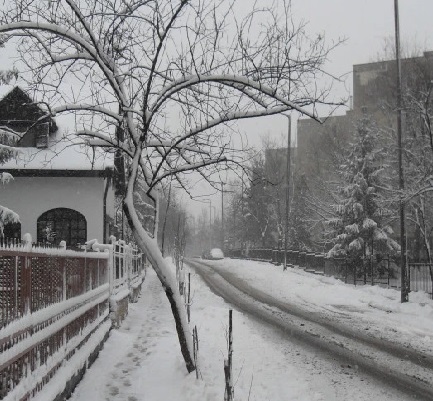
Between 2008 and 2014, I lived in a small town in eastern Hungary. It was an amazing experience that taught me about how other people lived outside of Australia. One experience that remains vividly in my mind was witnessing a Neo-Nazi rally in the city centre. On one occasion, my friends and I were told to hang back in a restaurant until the march was over.
Hungary is a very interesting country. Located in the centre of Europe, it was once the largest empire of its time and the envy of the world. Budapest and Vienna were its capitals, cities of exquisite beauty and elegance. The people were proud of their country, one that was churning out scientists, and Nobel Prize winners on a regular basis. They introduced new fashion styles, and were even at the peak of world football.
However, after the events of World War I and II, Hungary ended up on the losing side on both occasions. It was a slippery slope for the country, where a once proud nation found itself landlocked in the centre of Europe, and under the governance of a communist dictatorship. All the way from Moscow to the Berlin wall, half of Europe was indoctrinated with an ideology of communism. It wasn’t until the 1990’s, that Mikhail Gorbachev’s Russia dismantled the Soviet Union and gave back independence to the many eastern European states.
Twenty years on, I could still see the impact that communism had brought to the country. I could also see the evolution of capitalism, since Hungary’s independence from the Soviet Union. But it was in the older population that I could see how communism had affected the people there.
Many of those that lived during the Soviet occupation, appeared to hold onto the experiences they had during the last few decades. They seemed devoid of any sort of drive or passion. This was also reflected in the buildings I could see all over town. Buildings with a mix of the grandeur of the Austro-Hungarian heyday, sandwiched in between apartment blocks that were grey, rundown, and had no character.
As I sat through my medical exams year after year, I would face on many occasions grumpy professors that had been made to jump through hoops during their youth and believed it a necessity to exact the same treatment to the students. The failure rate at the university I attended was phenomenal. And as I went to the hospitals for practice each day, I would be confronted with an alarming number of patients that suffered from conditions such as severe depression and alcohol-induced cirrhosis.
The after-effects of communism in central and eastern Europe is clear today. What is also clear is the growth of capitalist Hungary from the 1990’s onwards. Funding from the European Union has seen motorways link up the major towns, with infrastructure and development to be the new creed in modern Hungary. Capitalism and Western influence is more evidently seen in the younger generations that were brought up watching American cartoons and movies.
But capitalism can also be another form of imprisonment. Costs of living had inflated substantially, whilst employment continued to follow salary trends that reflected the country’s communist past. When I started studying in Hungary, it was the beginning of the Global Financial Crisis. As the years went on, I witnessed poverty levels growing at a rising rate. Those that rose above the middle class were people in politics, and behind-the-scenes managers that ran restaurant businesses as a cover-up for mafia related activities.
And what I began to see was an increase in racial abuse and discrimination, mostly towards an ethnic minority that live there known as the “Roma people”, or commonly referred to as “Gypsies”. The increase in hostilities reflected a growing discontent in the country due to the lack of jobs available and the financial uncertainty it brought with it. From an international student’s point of view, I could see this discrimination trickle down to all foreigners. We were seen as people coming there to take away opportunity rather than provide for it.
Many times I would walk to a bar or club at night, and come face to face with groups of youths that stared in intimidation as if to issue a warning to get out of the country. Reports of attacks on students began to rise where some were beaten so badly, their faces were unrecognisable.
In my own pride, I did not want to show any weakness in the face of anger and hate. I would go to the gym and work hard to create a body with an intimidating build. I would train to fight. And so enraged I was that someone would judge me based on the colour of my skin, I welcomed the challenge. These experiences really opened me up to understanding what’s going on not only in Hungary, but all of Europe, and even the rest of the world. It is the growing divide between the rich and poor. It is the way our minds have been moulded to understanding the truth about life. We see no equality in each other, even though the physics tell us that all of us are the same.
Until this is understood, our world faces growing unrest that will ultimately lead to further conflict. It is easy to feel like a victim. We all react in defensive ways when someone threatens us, and I was no different. It takes a great amount of courage to call out the truth that is in all of us, yet remains ignored – that all of us are the same.
Whilst I did experience discrimination during a time of desperation and survival, I also met many people in Hungary with beautiful hearts. No matter where we are on the planet, it is up to those who are blessed with the insight of truth, to stand up and fulfill the destiny of our world. Through each of our actions, the planet can live harmoniously if we choose compassion, understanding, and love.