The search for salvation.
In life we often find ourselves going through extremes of circumstances. A rollercoaster of emotions. The euphoria and excitement of getting something that you always felt that you wanted. Or the devastation when something is taken away from us. Through my own experiences in life, I can start to see a pattern that emerges. We continue life in a certain way, and then that lifestyle becomes confronted with a challenging decision. At times, these challenges that we face can be quite devastating. But I like to look at things in perspective. As in anything that we do, we are always given options or free will to make a choice. When we muster up the courage to make that choice, it results in a new lifestyle that was previously unimagined. The old things we used to do that was part of our lifestyle, gets swept away almost in an instant. And through faith in ourselves, we establish a new norm to which our lifestyle continues.
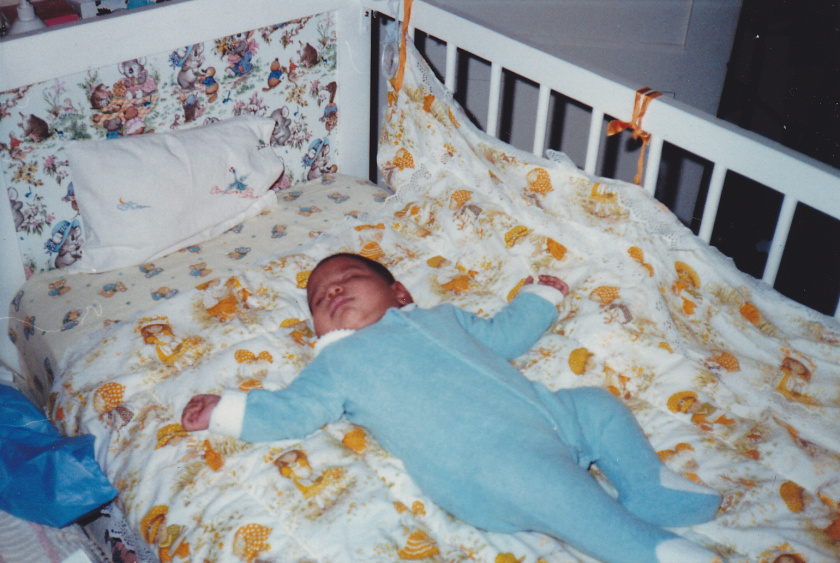
In 1984, my mother found out that she was pregnant. My father found a job in the railways working as a train guard for Melbourne’s metropolitan train network. They were saving up as much as they could to create a better lifestyle for themselves, and also to find a way to get their relatives out of the conflict that was ensuing in Sri Lanka. For my mother, losing her brother and father was agonising. She did not wish to see the same fate for the rest of the family. Nor did my father, who held fears for his own family.
Apart from saving money, there wasn’t much else that could be done. For much of the 20th century, Australia had an informal law which scrutinised immigration from non-European countries. It was known as the ‘White Australia Policy’. After World War II, successive governments gradually became more open to the idea of immigration into Australia, from all races across the globe. By 1975, a law had been passed that prevented racial discrimination in the immigration process. This eventually allowed my parents to migrate to Australia but there were no guarantees that they would be granted a permanent status in the country. Despite the progress made since Australia’s Federation, immigration was now based on skilled migration. And my parents did not fit that category. The one they did fit into however was based on being refugees from life-threatening circumstances.
Sri Lanka’s situation during the 1980’s was a difficult one to evaluate. One day bullets and shells would be raining from the sky, and the next week would bring an eerie calmness in anticipation for another day of misfortune. The political sides in the conflict would cover up a lot of the atrocities going on, and show the world their own altered version of reality that many in the international community didn’t really take notice of. So for my parents to claim a permanent status in the country, they had to prove to the Government of Australia that there actually was violence going on in their homeland and that their lives were in danger if they stayed there. Unfortunately at the time, this was a difficult thing to prove.
In November 1984, my father received a phone call from overseas. When he answered, the news was not what he expected. His brother, Martin, was traveling on a bus to work in Sri Lanka. An army truck filled with armed soldiers, stopped in front of the bus. They were drunk and enraged. Only a few hours before, an attack was made by a rebel group on the army’s compound, and many lives were lost. A soldier stepped into the bus. He asked the driver where they were headed. The soldier then turned to the passengers, pointed his gun, and shot every person.
My uncle was standing at the front in a fully packed bus. He was one of the first to be shot and died immediately. My father later discovered the details of these events from a survivor. One of the passengers at the back of the bus jumped out of the window and pretended he was dead. The soldiers, too inebriated to understand the gravity of their actions, assumed he was a body that could be cleaned up later. They left the scene, and the survivor ran off when he got the chance.
My grandfather, the school principal, had the task of retrieving his son’s body. This required great courage. He stepped into the army compound to negotiate terms in releasing his son’s body, not knowing what fate would befall him in entering the premises in the first place. As he walked in, he saw bodies strung on trees with rope. The bodies were bloated and barely recognisable. The soldiers, realising the mess they made needed a clean-up, returned to the scene of the crime to collect the dead bodies. They strung rope onto each corpse, and tied them onto the back of their truck. The truck was then driven to the compound, dragging the bodies on the ground along the way.
I can imagine how daunting this must have been for my grandfather. Sensible minds at the army compound realised that these events needed to be quickly swept under the rug. They agreed to the release of my uncle’s body on the condition that the funeral be held in the presence of army soldiers, that the body would be burnt in the next few hours, and that my grandfather sign a document stating that my uncle passed away from natural circumstances.
As much as my father wanted to embrace his family in Sri Lanka, and share in the grief of losing a man they loved so much, my father had no choice but to continue life in Melbourne. There was no point in jeopardising any chance that my parents would have in being able to stay permanently in Australia. Heartbreaking as it was, what else could my parents do?
A few days after my uncle Martin had passed away, my father received a letter in the mail. It was addressed to him from his now deceased brother. My uncle had mailed it just before he got caught up in the bus incident. My father cherishes that letter to this day and never forgets it. The joy and the deep sadness of reading the words of a brother no longer in physical existence. The letter was written to congratulate my mother on her pregnancy. His final words were, “Congratulations and I wish for you to have a baby boy.”